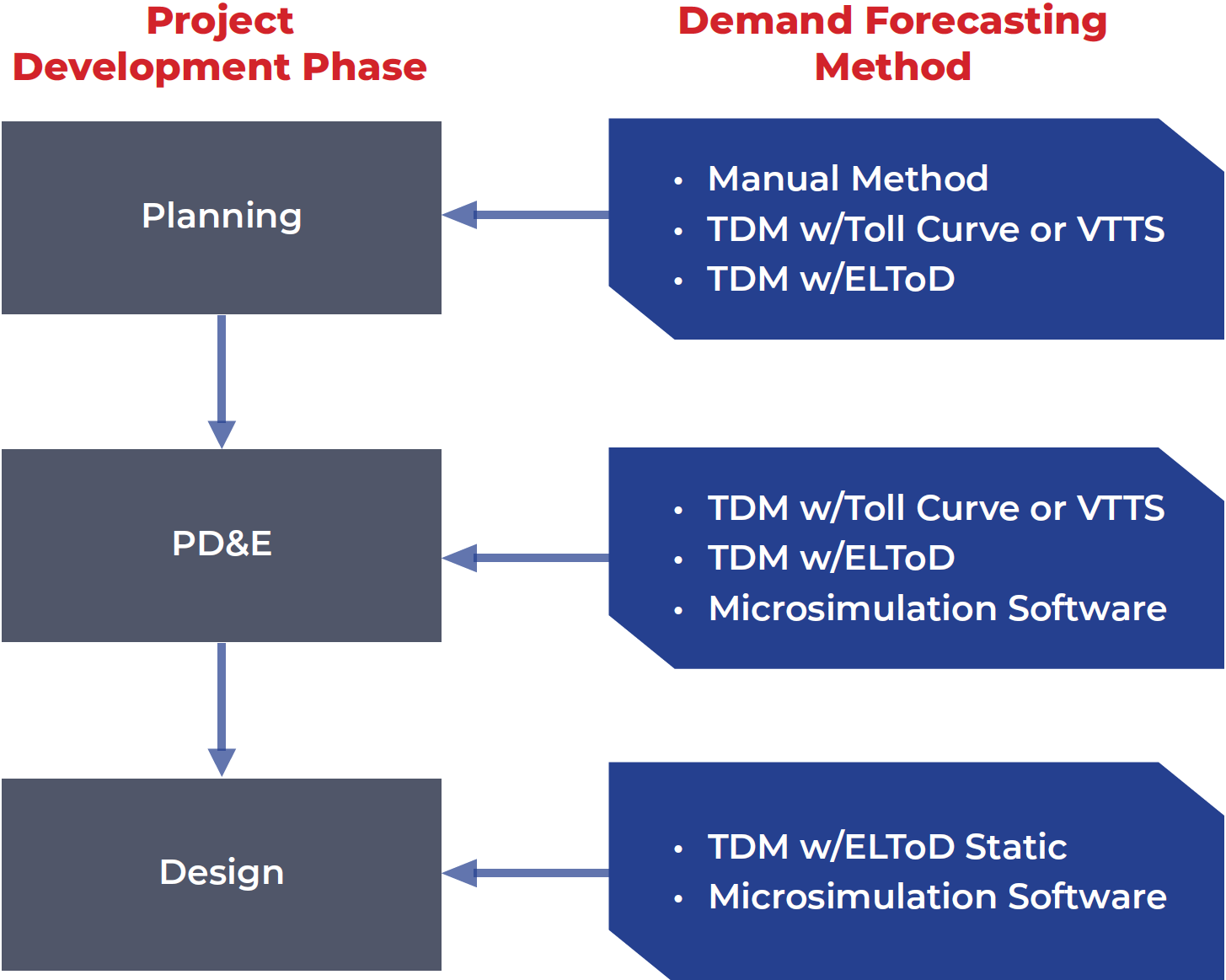
All Express Lanes projects include a forecast process to determine both the corridor demand, and the split between general use lanes and Express Lanes traffic. Project traffic forecasts are initially prepared in the Planning or PD&E phases of the project development process. As part of these phases, every effort is made to accommodate any and all project alternatives so that they can be given full consideration in the development of project traffic. This will help minimize the need to update forecasts during the Design phase, and thus, help reduce the amount of potential rework.
Figure 9-1 presents a general guidance on the tools and the methodologies recommended for each phase of the project development process. When selecting an appropriate methodology or tools toforecast demand for Express Lanes, it is important to note that each project is different and has its unique set of issues and challenges. The tools and methodologies listed for each phase are available options, they can be used individually or jointly to best address the issues. The selection should be made based on the purpose and needs of the project, available data and tools, time and budget, and the desired level of accuracy of the forecasts. It should also be noted that, depending on the duration and progression of the project, project traffic for Express Lanes may need to be updated if the major assumptions have changed or there are significant changes in travel patterns in the study area. The project team should consult with the District Project Manager to determine the need to update the project traffic.