The following steps are used to generate the 18-KIP ESALD.
Step1:
Receive request for 18-KIP ESAL estimation
The request for ESAL estimation could come as a stand-alone request, or as part of the general project traffic request. Each FDOT district has a different format and specific time framework to complete the work. Users are advised to consult with District Planning Office and/or individual Project Mangers before starting the work. Figure 8-4 shows an example of Project Traffic Request form. Typical information requested includes AADT for project analysis years, K, D, and T factors, turning movement volumes, and 18-KIP ESAL Report.
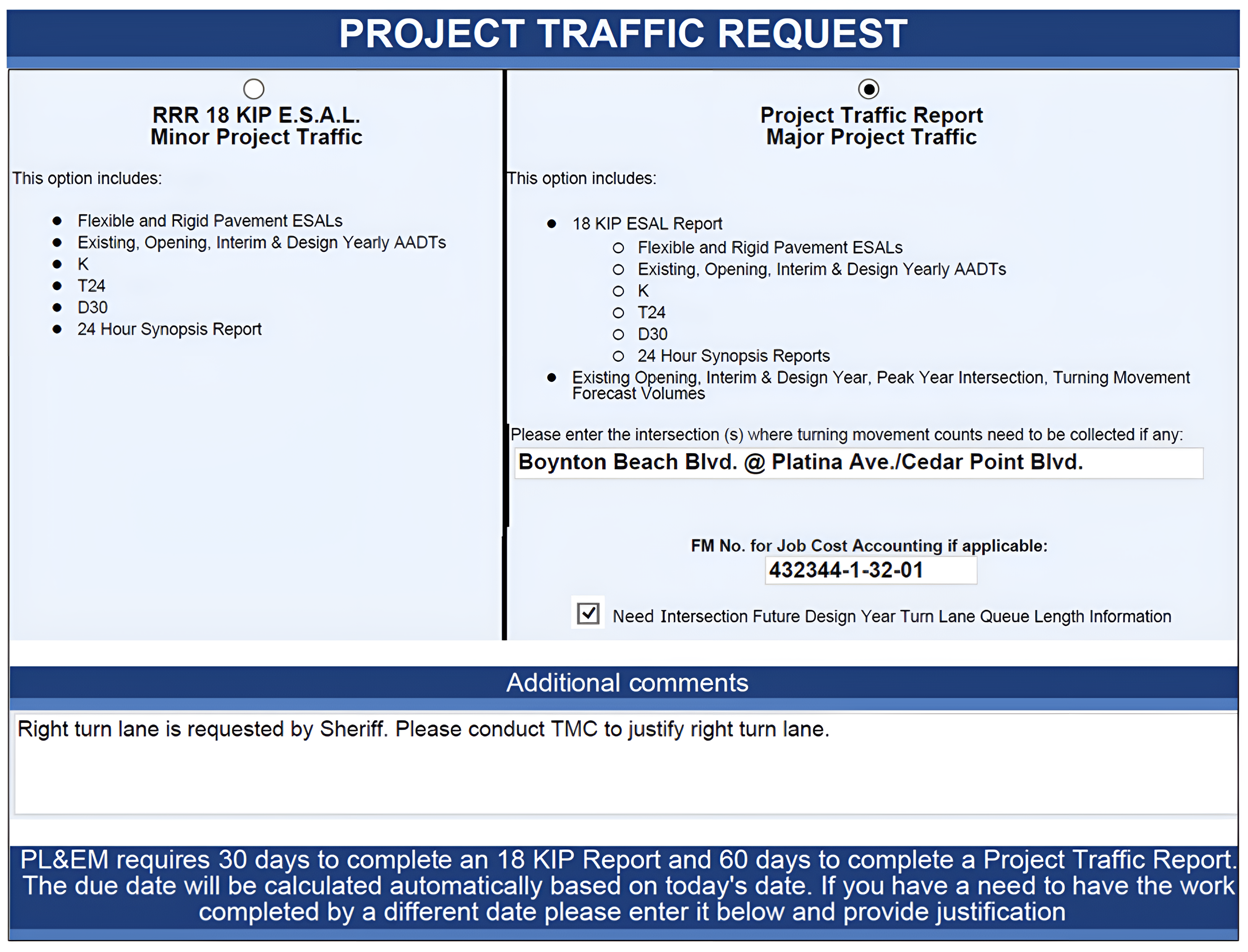
Figure 8-4 18-KIP ESAL Request Example
Step2:
Collect Traffic and Geometric Information about the Facility
Additional information including Functional Classification (RCI Feature 121),Through Lanes (RCI Feature 212), Median (RCI Feature 215), Speed Limits (RCI Feature 311) and Traffic Flow Breaks (RCI Feature 331) can be accessed through Straight-Line Diagrams Online GIS Web Application (See Figure 8-5).
Check Florida Traffic Online (FTO) for Continuous TMS or Short-Term TMS stations within the project limits or in close proximity (one mile on either side of the limits). Download the Historical AADT Report. This report also contains T24, and Design Hour Truck factor. Depending on the budget or schedule, request 24-hour to 72-hour short-term vehicle classification counts at the study location.
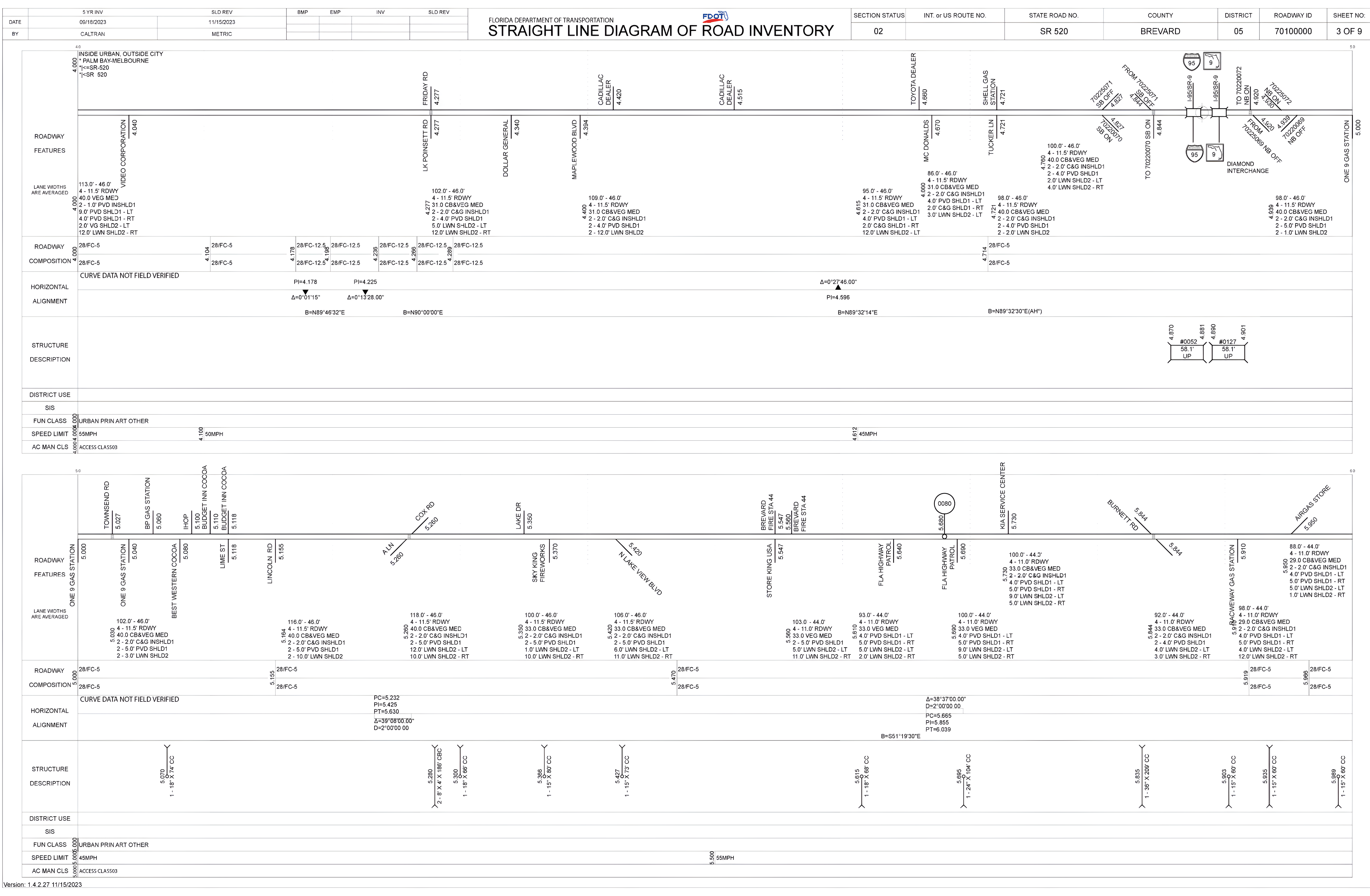
Figure 8-5 Straight Line Diagram Example
Step3:
Request Model Volumes
Request the modeling staff to provide adopted model volumes for both base year and future year for the project area. If the model volumes are not readily available, request a copy of the model and run the model to generate model volumes. Convert the model data from PSWADT to AADT using MOCF if needed. Figure 8-6 shows an example of model volume plot displaying assigned traffic volume along the study corridor in Brevard County.
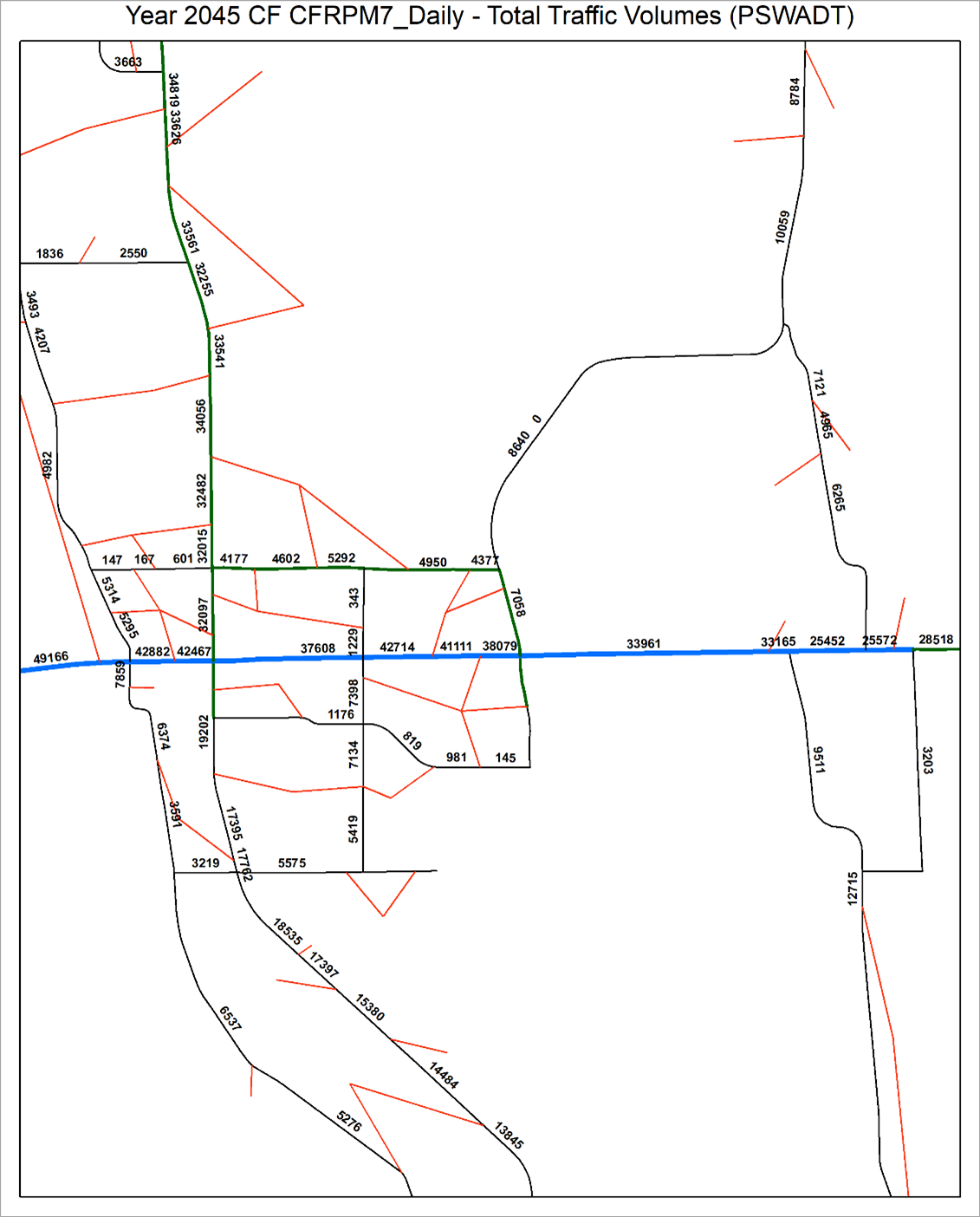
Figure 8-6 Future Year Model Volumes from CFRPM 7.0 Example
Step4:
Determine Existing Year AADT
Calculate average daily traffic volumes from short-term vehicle classification counts. Apply an appropriate Seasonal Factor to convert the ADT to AADT. No axle adjustment is needed if vehicle classification counts are collected. If short-term traffic counts are not collected, estimate existing year AADT using information from Florida Traffic Online (FTO), other studies, or similar facilities nearby.
Example:
48-hour classification counts were taken on August 23 and 24, 2022. The daily counts for the two days are 32,572 and 32,553. The corresponding Season Factor is 1.05. The Existing Year AADT is calculated as follows:
$$ADT=\frac{32,572 + 32,553}{2}=32,563$$
$$AADT=ADT\times{SF}=32,563\times{1.05}=34,191$$
$$AADT=34,000$$
Step5:
Determine Design Traffic Characteristics
Develop design hour factors K, D, and T24 following the guidelines described in Chapter 2. The subject facility is a suburban arterial and the roadway context classification is Suburban Commercial (C3C). The K Factor should be a single value within the Standard K Factor Range as shown in Table 2-1 based on the context classification, area type, and facility type. The D and T factors are determined by comparing the measured factors from the short-term vehicle classification counts with the respective factors reported in the FDOT RCI database. The recommended values should be within the allowable range and reflect the typical travel characteristics observed in the past and expected in the future.
Example:
The measured Peak-to-Daily ratio was 7.94%, which is within the Standard K Range for the facility. The "D" value based on the short-term classification counts was 52.76% for the study location. The FDOT RCI database reported a D value of 53.40% for a FDOT Short-Term TMS site nearby. The measured daily truck factor (T24) from the classification count was 5.01%. The FDOT RCI database reported a daily truck factor of 4.50% for the same FDOT Site. Based on the comparison, the Standard K-Factor of 8.00%, the D Factor of 52.76%, and the daily truck factor (T24) of 5.01% are recommended, all based on field measured data at the site.
Table 8-3 Determine Design Hour Factors Example
| Freeways | Study Location |
| Peak-to-Daily Ratio (Measured) | 7.94% |
| Standard K Factor Range | 7.50% - 9.50% |
| D (Measured) | 52.76% |
| D (From FDOT RCI) | 53.40% |
| Arterials and Collectors | |
| T24 (Measured) | 5.01% |
| T24 (From FDOT RCI) | 4.50% |
| Arterials and Collectors | |
| K Factor | 8.00% |
| D Factor | 52.76% |
| T24 | 5.01% |
Step6:
Develop Future Year Forecast
Verify if a Project Design Traffic Report was prepared within the last two years, covering the limits of the request for the 18-KIP ESALs. The information contained in the Project Design Traffic Report will be the most reliable and the data should be utilized. If a traffic report is not available, the historical data and model data will be used to develop traffic projections for future years.
Example:
In the same example, historical AADT volumes are available at a Short- Term TMS site within the project limits. The AADT volumes for the past ten years from 2013 to 2022 are used for Trend Analysis. It should be noted that the reported AADT for 2020 is still used even though it is under abnormal conditions. A careful evaluation of the 2020 AADT indicates that there are no significant differences in volumes between the adjacent years and the 2020 AADT generally follows the growth trend. Trend analysis was conducted first to determine the growth pattern and growth rate to be used for traffic forecasting. Figure 8-7, Figure 8-8, and Figure 8-9 show the trend analysis results using Linear Growth Option, Exponential Growth Option, and Decaying Exponential Growth Option, respectively. The R-Squared values for the three growth options are all higher than 70%, indicating a good fit in all cases. However, all three options show a negative growth. Thus, historical AADTs were not used for future travel demand forecasting.
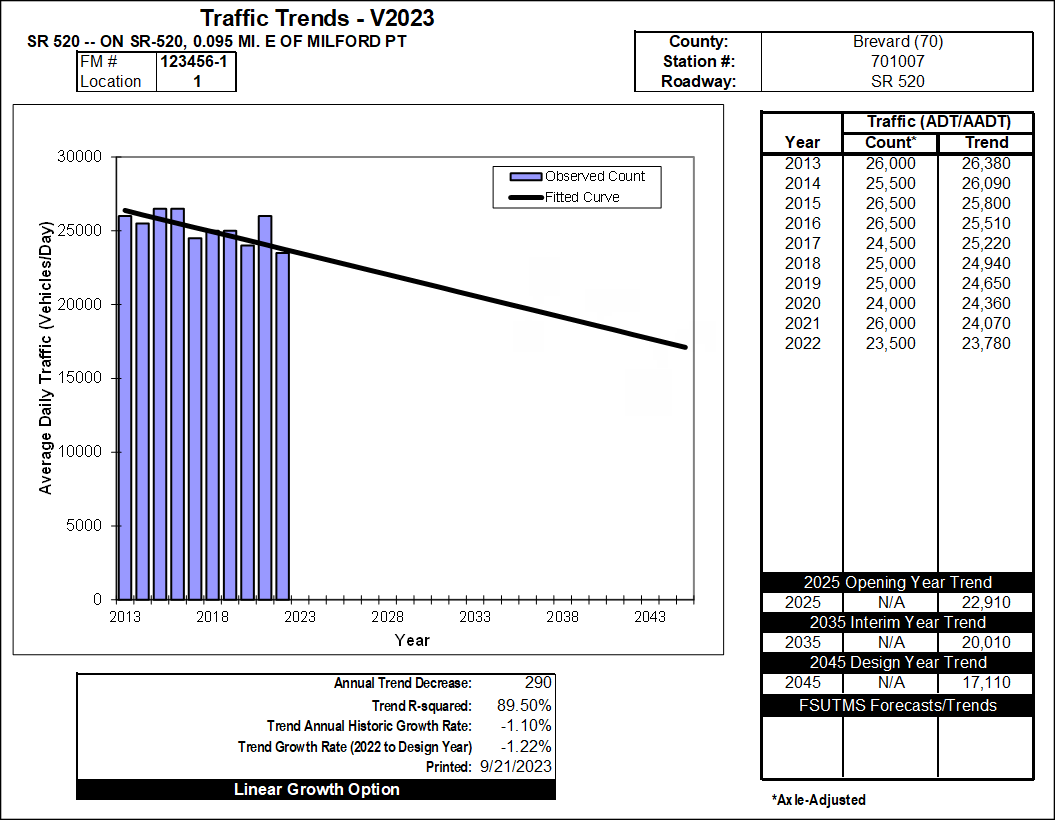
Figure 8-7 Linear Growth Option Example
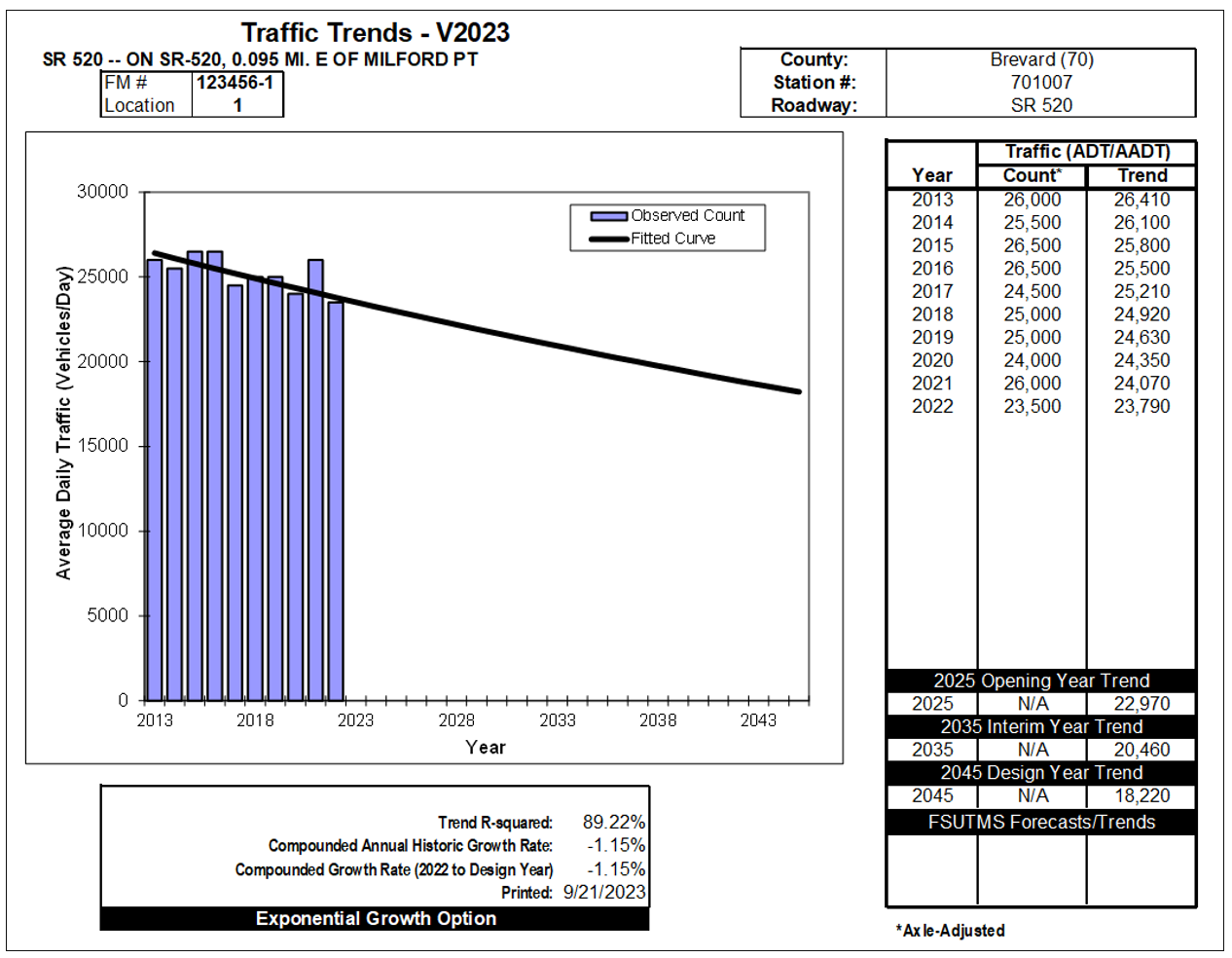
Figure 8-8 Exponential Growth Option Example
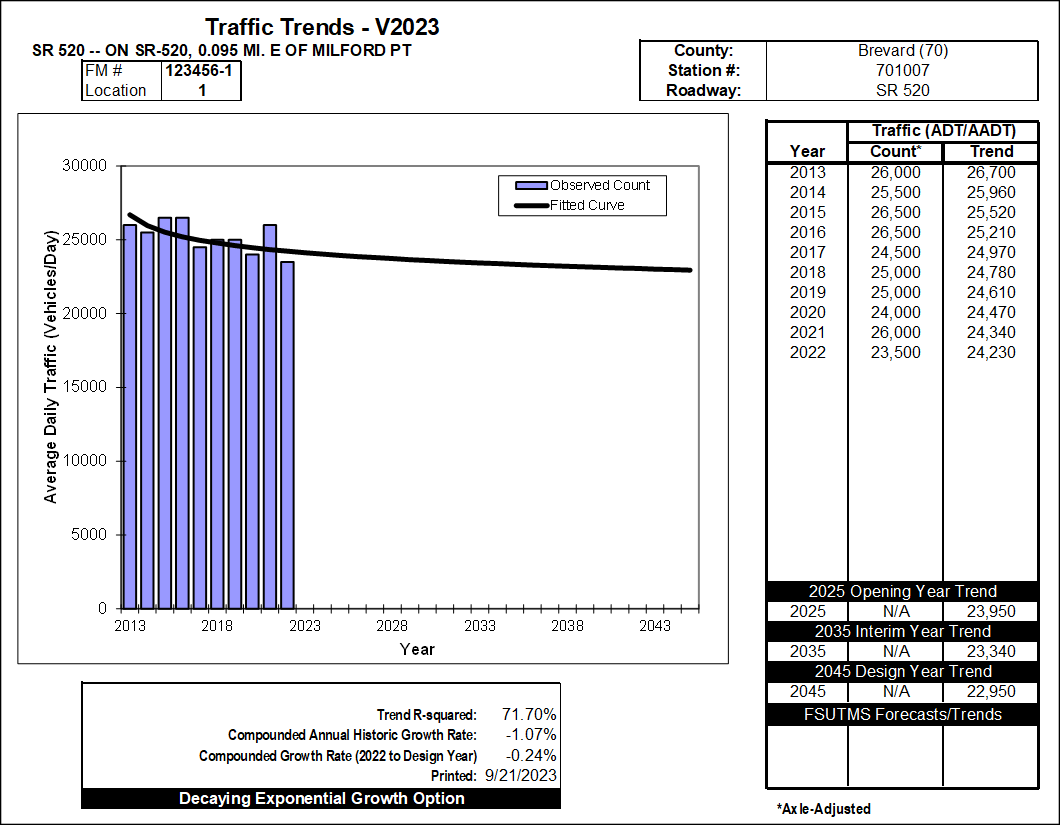
Figure 8-9 Decaying Exponential Growth Option Example
Other sources of data were evaluated to calculate the growth rate. The growth rate calculated based on base year and future model data was 0.40%. In addition, Year 2022 population estimate and Year 2025 to 2045 population projections were obtained from the BEBR at University of Florida, and the population growth rate was determined to be 0.82%. Based on the comparison of growth rates obtained from various sources and in consultation with the FDOT, an annual growth rate of 0.60% was recommended to obtain the Opening Year 2025, Interim Year 2035 and Design Year 2045 projections for the study location.
With base year (2022) AADT of 34,000 and a growth rate of 0.60%, future year AADTs can be estimated using simple linear growth option as shown in Figure 8-10.
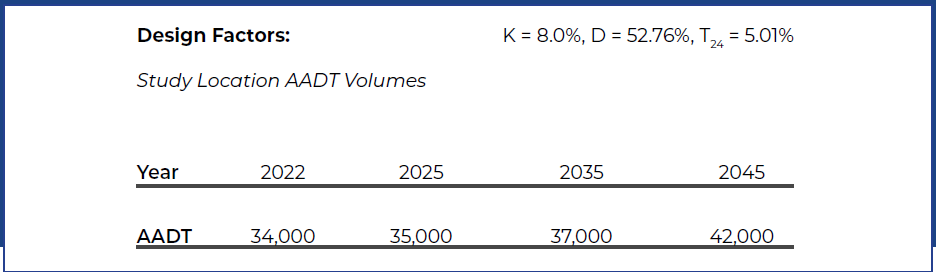
Figure 8-10 Project Future Year AADT Volumes
Step7:
Prepare Input Data for ESAL Calculation Spreadsheet
Open ESAL_V2023.XLSM. This Excel spreadsheet is a user-friendly menu/macro driven tool for input, calculation, and printing of ESALs. It can process up to five (5) roadway segments at the same time. Figure 8-11 shows the main menu of the ESAL Tool, Version 2023. The input process is fully menu driven. Enter the required information obtained from previous steps, and select the pavement type and Daily Directional Split, the spreadsheet will automatically calculate the required ESALs.
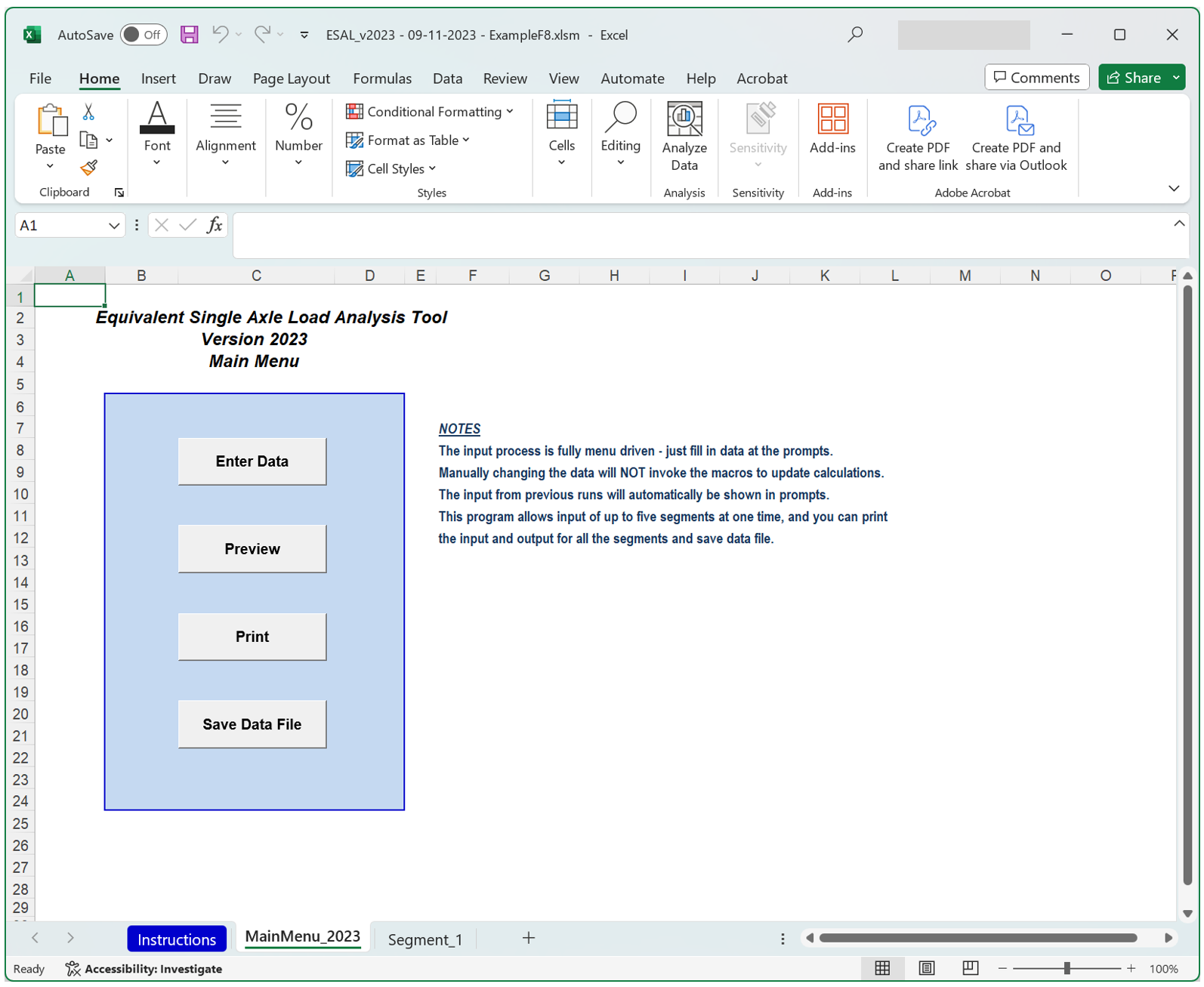
Figure 8-11 ESAL Tool Main Menu
Example:
- Enter project information. The project information includes FM number, project description, and number of segments. The information is optional and only for project identification purposes. Number of segments is a required input. Click on the button "Clear Project Info" button to clear all the project information, including the data for the old roadway segment. The number of segments is set to 1 for this example. The Project Information input screen is shown in Figure 8-12.
- Enter roadway segment information for all segments, which may include Roadway ID, Location Description, Type of Roadway for Flexible Pavement, Type of Roadway for Rigid Pavement, Growth Rate Calculation Method, Years, Number of Lanes, Growth Option, AADT Volumes, Growth Rate, and Truck Percentages. If the new data for the segment is needed, click on the "Clear Input Data" button to clear the data for the segment. If the number of segments need to be changed, click on "Back to Project Info" button to go back to Project Info page, then change the number of segments and go to the next page to enter all information. Once the data for all segments is finished, click the "OK" button to complete the ESAL analysis. The roadway Segment Information input screen is shown in Figure 8-13.
- Preview results: click the “Preview” button to show all the input and output for each roadway segment.
- Print results: click the "Print” button to print out the input and output for all the roadway segments.
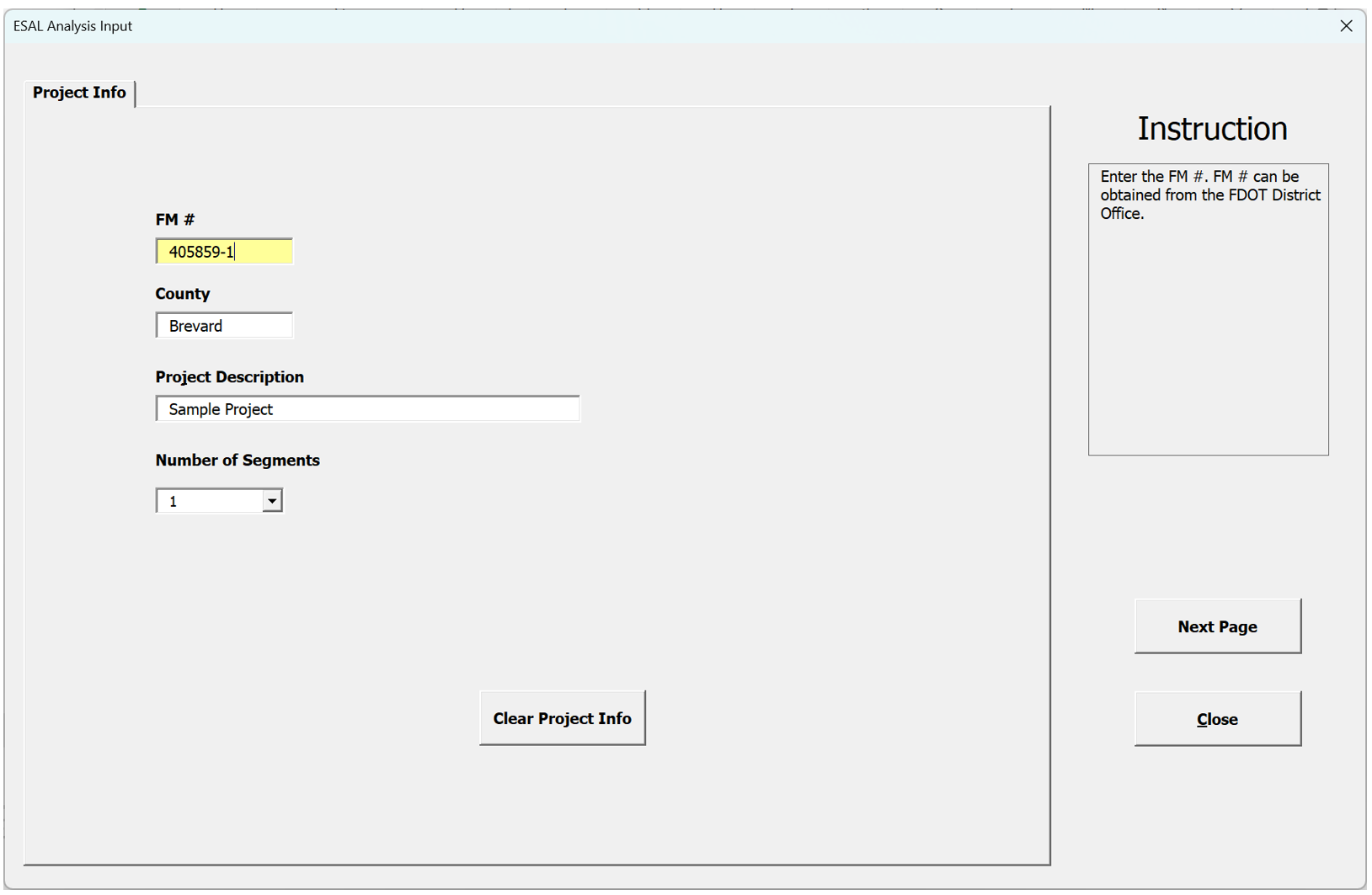
Figure 8-12 ESAL Tool Project Information Input Screen
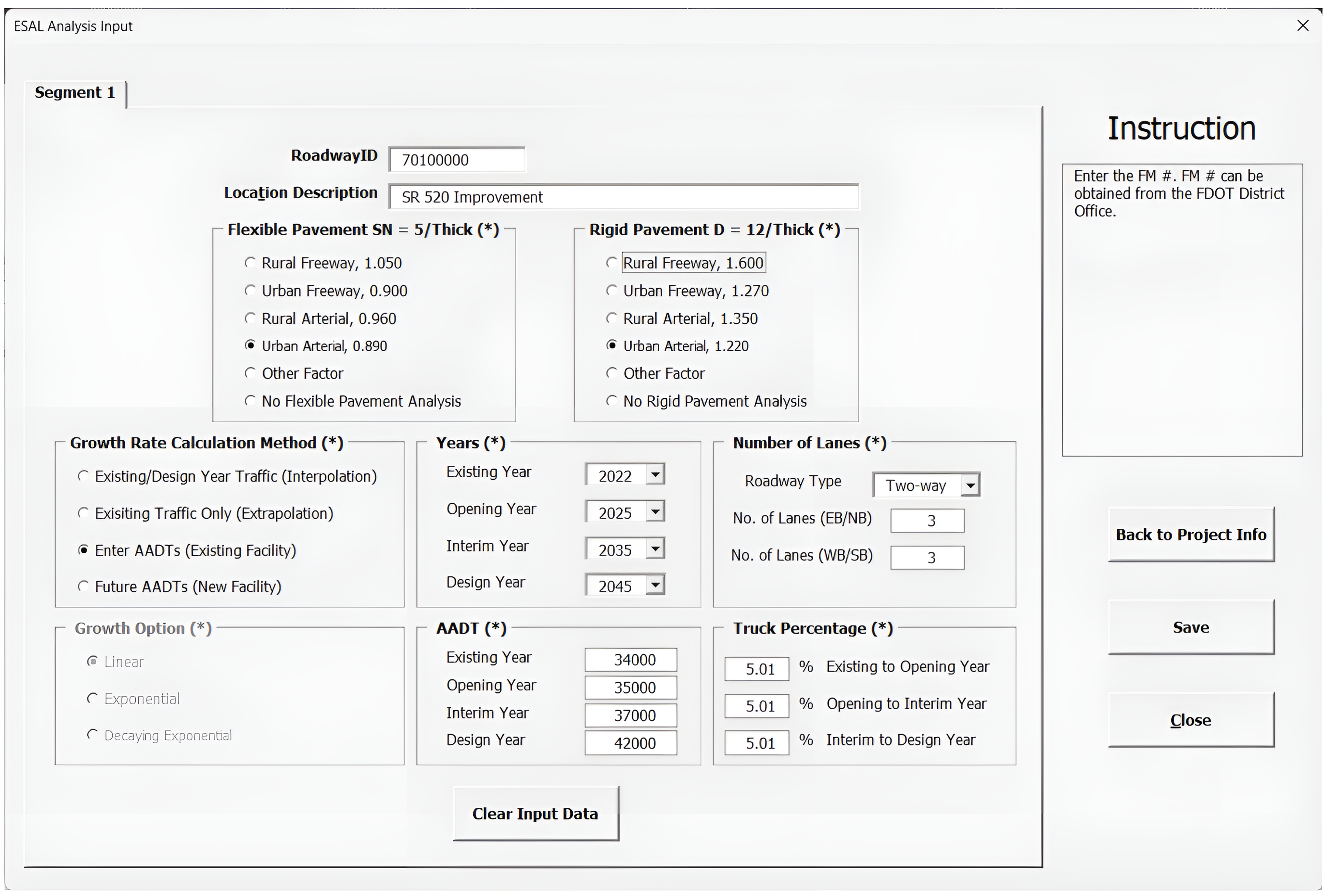
Figure 8-13 ESAL Tool Segment Information Input Screen
Step8
Print Output Report from ESAL Calculation Spreadsheet
Print out the 18-KIP Report and prepare the transmittal memo. Have the designated traffic engineer review and sign the memo and 18-KIP Report. Figure 8-14 shows an example of the Output screens for the sample project.
Example:
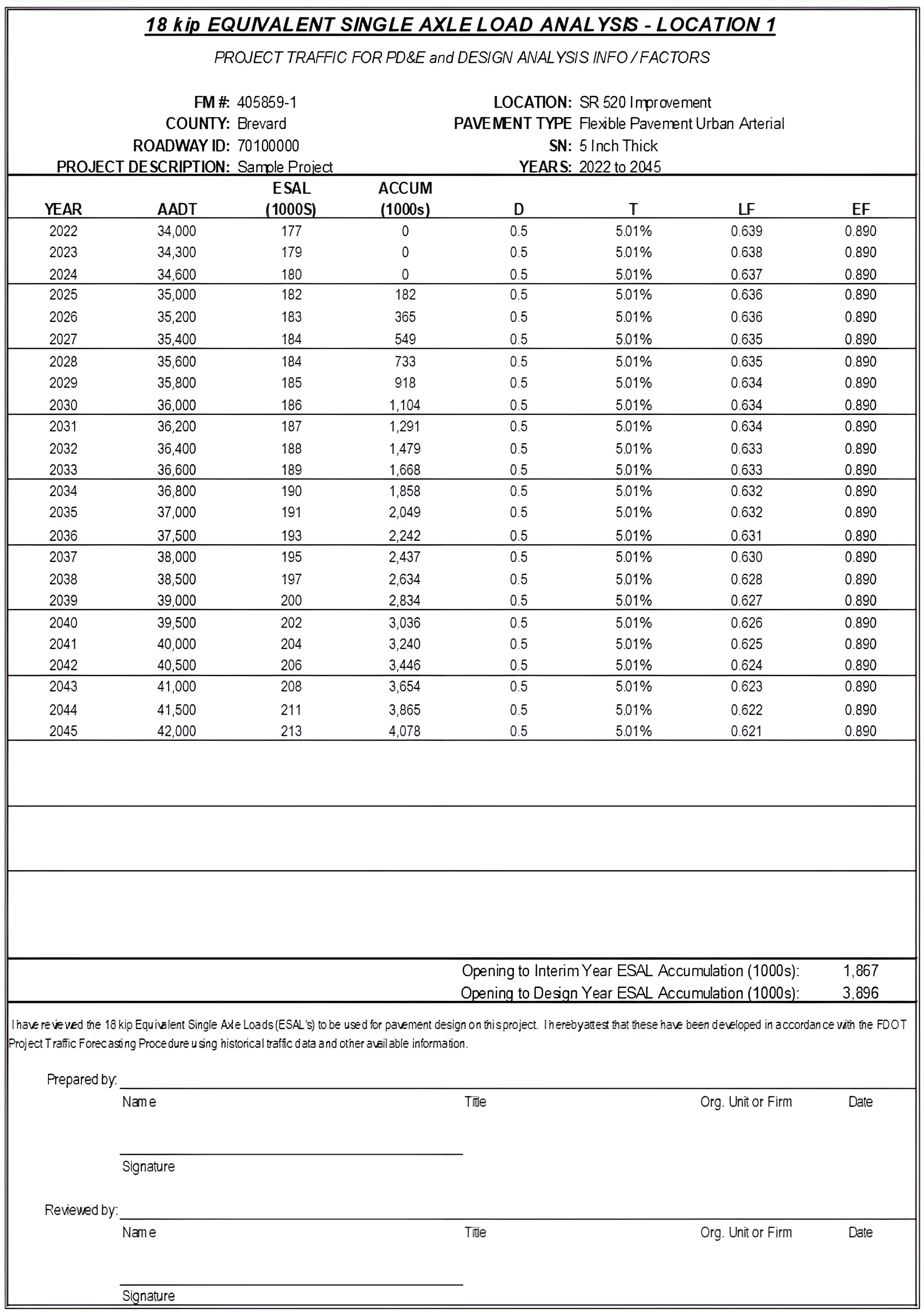
Figure 8-14 18-KIP ESAL Report Printout
Step9
Documentation and Distribution
Make necessary copies for distribution as follows:
- Original transmittal memo and original 18-KIP ESAL Report to requestor.
- Copy of transmittal memo to the designated traffic engineer or transportation planner.
- Copy of transmittal memo and 18-KIP ESAL Report to reading files.
- Copy of transmittal memo, 18-KIP ESAL Report, and all backup documentation to 18-KIP ESAL project files.
- Distribute approved copies of the reports to outside parties requesting the information.